Introduction
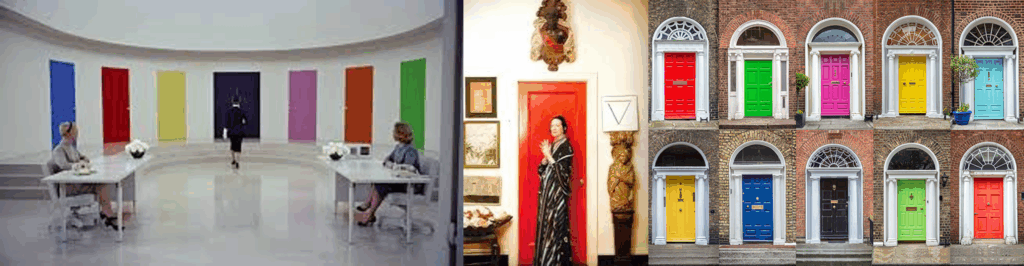
Accent doors in interior design are a timeless design strategy. From the front doors lining Dublin’s Merion Square to Diana Vreeland’s famously lacquered red door, accent doors have long been iconic interior design statements. Even the opening sequence of Funny Face—set inside a Manhattan fashion magazine—understands the power of a door as a moment of theater.
Here in New York City, that same sensibility still applies. Just off Fifth Avenue, I know a couple who quietly broke tradition in a typically restrained co-op building by repainting their prescribed gray-and-green front door in a refined orange. The result was unmistakable: a subtle rebellion, a flash of personality, and a lasting impression that felt intentional rather than flashy. It’s a perfect example of how accent door ideas can transform a space with confidence and restraint.
Accent doors work because they are both expressive and controlled—a small move with outsized impact.
Why Accent Doors Work So Well in Apartments
Compared to an accent wall, accent doors are one of the easiest interior door color ideas to execute, and far less disruptive. There’s no need to rearrange furniture or commit to an entire room’s worth of color. Each door becomes a contained design moment—often achievable in a single afternoon.
Accent doors introduce contrast and focus. They draw the eye, guide movement through a space, and subtly organize how rooms are read. When thoughtfully chosen, a door color can echo tones already present in rugs, furniture, or artwork, pulling a room together and amplifying its overall impact.
This makes accent doors in apartments especially effective, where square footage is precious and architectural gestures need to earn their keep.
Choosing the Right Color, Finish, and Material
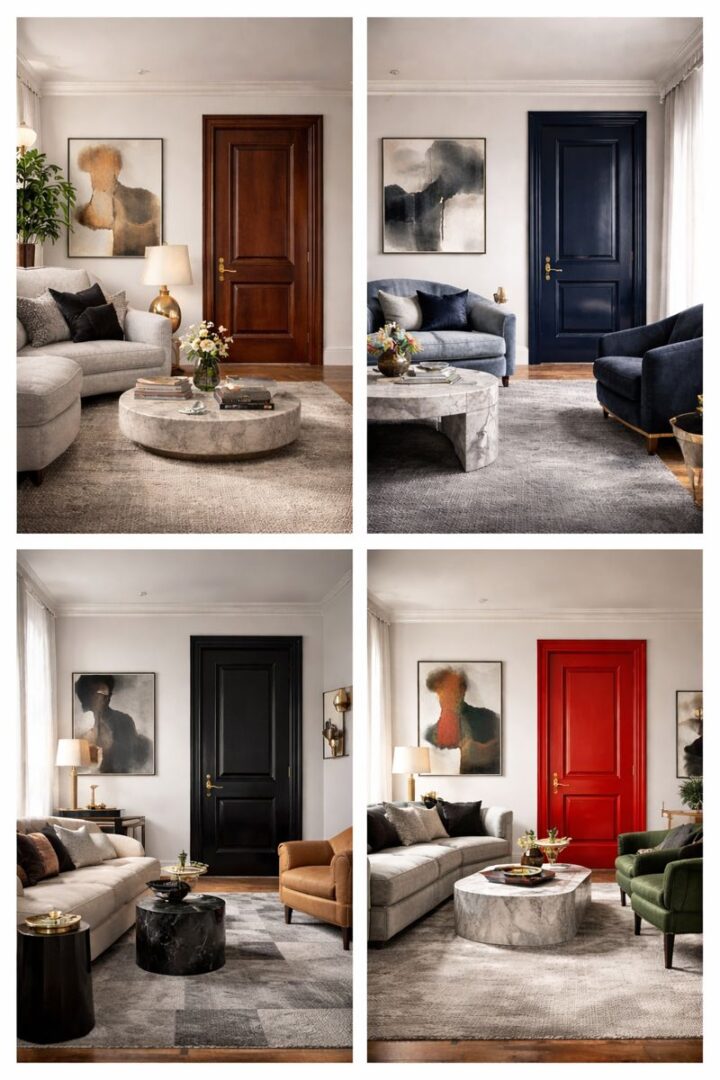
Color choice plays a powerful role in how a space feels. Deep, saturated tones—navy, oxblood, charcoal, or black—add depth and gravity, grounding a palette. Warmer hues and natural wood stains feel welcoming and approachable, creating friendly focal points without overwhelming the room.
The beauty of painted interior doors is their flexibility. A single can of paint can transform one—or two—doors, making this a lower-cost alternative to accent walls. It’s also a great opportunity to experiment with a premium paint brand without the expense of painting an entire room.
Because doors are relatively easy to repaint, the color can evolve over time. A hue pulled from the room’s palette can be amplified for dramatic effect, then swapped out years later to completely shift the mood.
Beyond color, finish and material matter. Glossy lacquer, visible wood grain, or simple paneling can dramatically change how light interacts with the surface. In children’s rooms or play areas, playful color choices bring charm and personality without permanent consequences.
Using Accent Doors to Create Hierarchy and Wayfinding
Accent doors aren’t only decorative—they’re functional. Differentiating doors through color, material, or finish helps establish hierarchy within a home, signaling entries, transitions, or destinations.
In open-plan apartments, a statement interior door might mark a private office, a powder room, or a bedroom zone, making navigation more intuitive while keeping the overall space visually engaging. Bright shades energize and animate, while deeper tones calm and anchor.
This kind of visual cueing is especially useful in modern interiors, where walls are fewer and spatial definition relies more heavily on design detail.
A Small Gesture with Lasting Impact
For all of these reasons, accent doors remain a timeless interior design choice. They offer an opportunity to introduce personality, color, and architectural clarity without major construction or commitment.
In New York City apartments—particularly co-ops, where every design move must be deliberate—interior door color ideas like accent doors prove that sometimes the smallest gestures leave the strongest impression.