
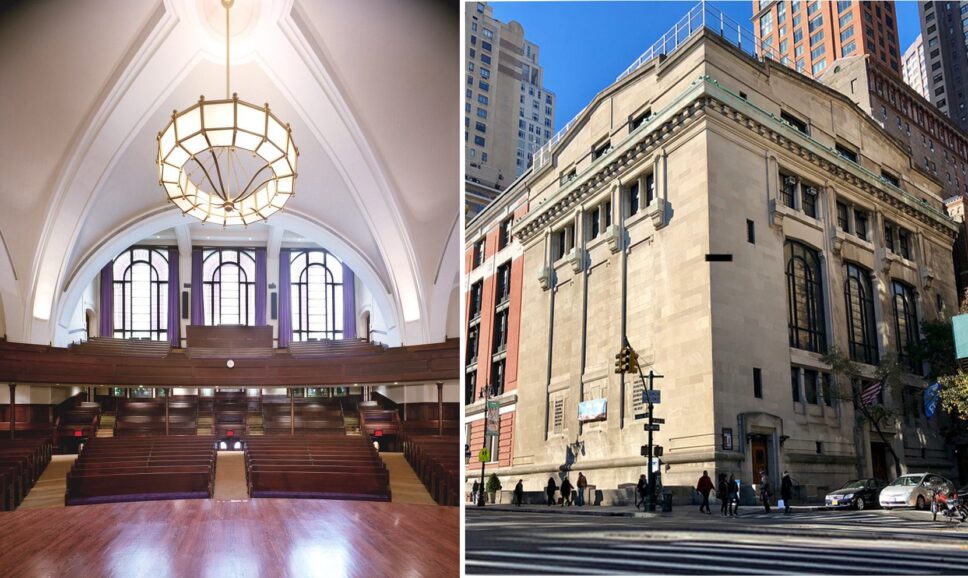
Renovation of the New York Society for Ethical Culture Landmark Auditorium
Architecture: Mark Holmquist Architect
Interior Design: Jamie Drake (Drake Design Associates)
The New York Society for Ethical Culture, located at 2 West 64th Street in Manhattan, is one of New York City’s significant civic and cultural landmarks. Designed by architects Robert D. Kohn and Charles S. Clark and completed in 1910, the Beaux-Arts building reflects the ideals of the Ethical Culture movement founded by educator and philosopher Felix Adler in 1876. The building is both a designated New York City Landmark and listed on the National Register of Historic Places.
This renovation focused on restoring and adapting the Society’s principal meeting space to better support contemporary events and performances while preserving the architectural character of the historic interior. The project required careful coordination between preservation goals, functional upgrades, and current NYC building code requirements.
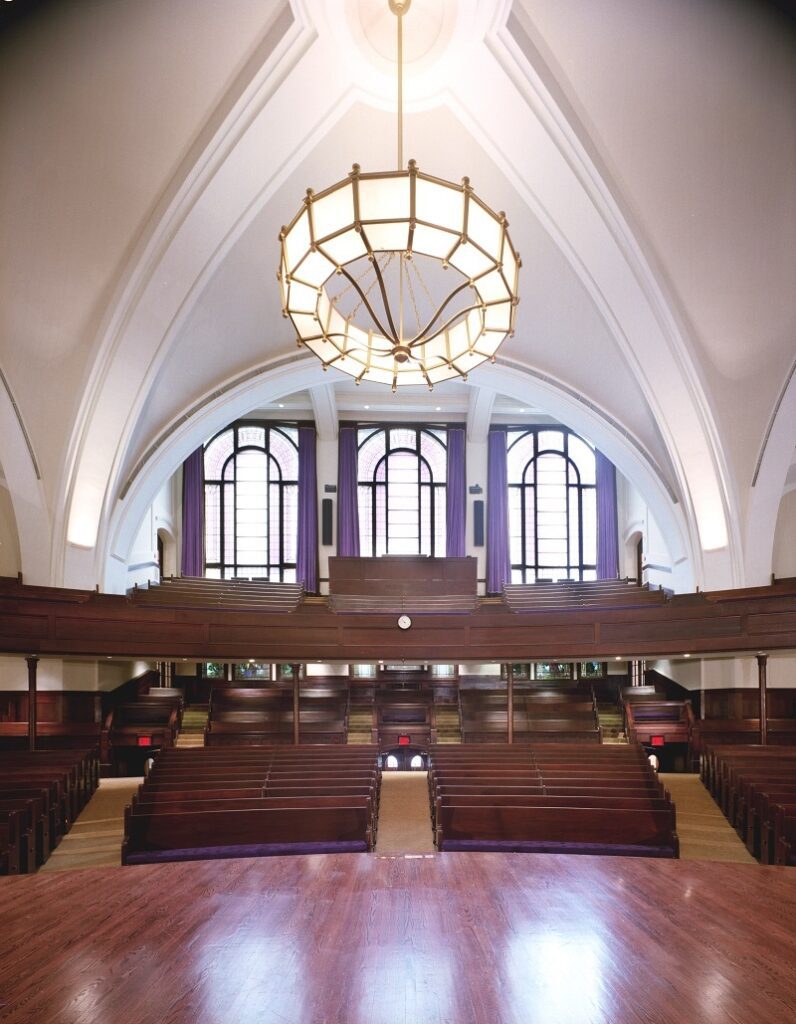
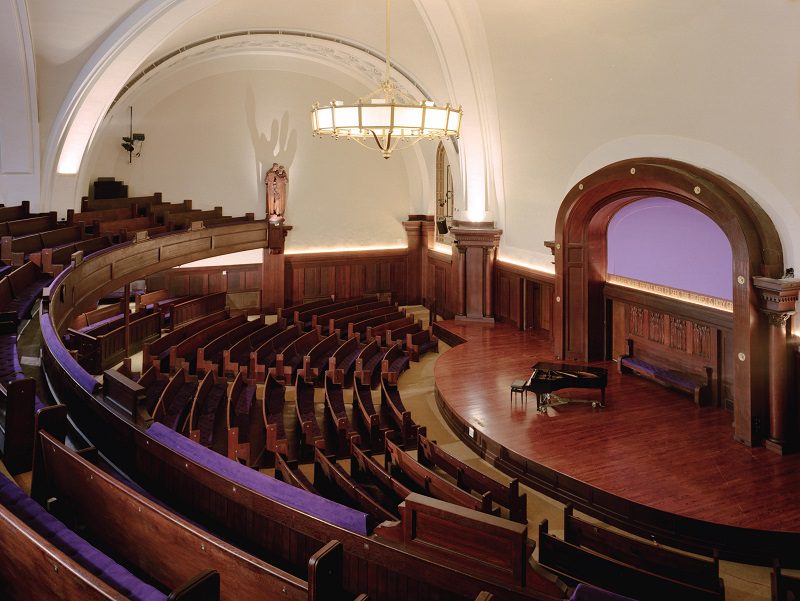
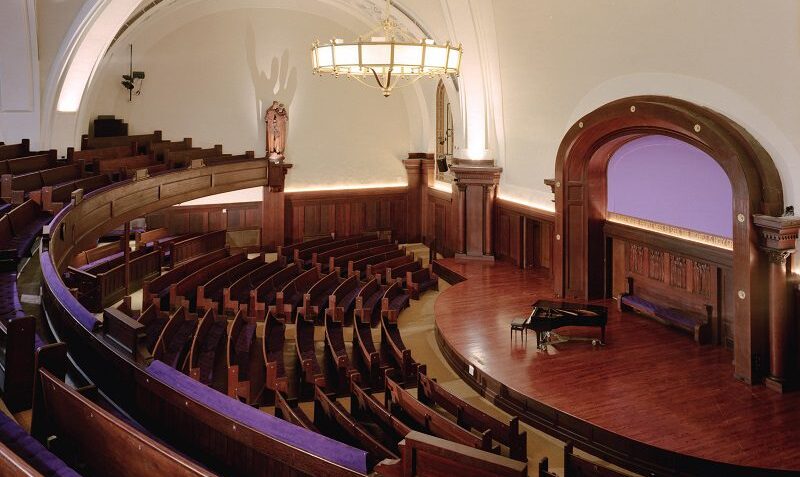
A primary objective of the renovation was the enlargement of the existing stage to improve flexibility for lectures, performances, and public programming. To accommodate updated life-safety and circulation requirements, the original pew seating was selectively reconfigured to create wider aisles and improve accessibility throughout the space.
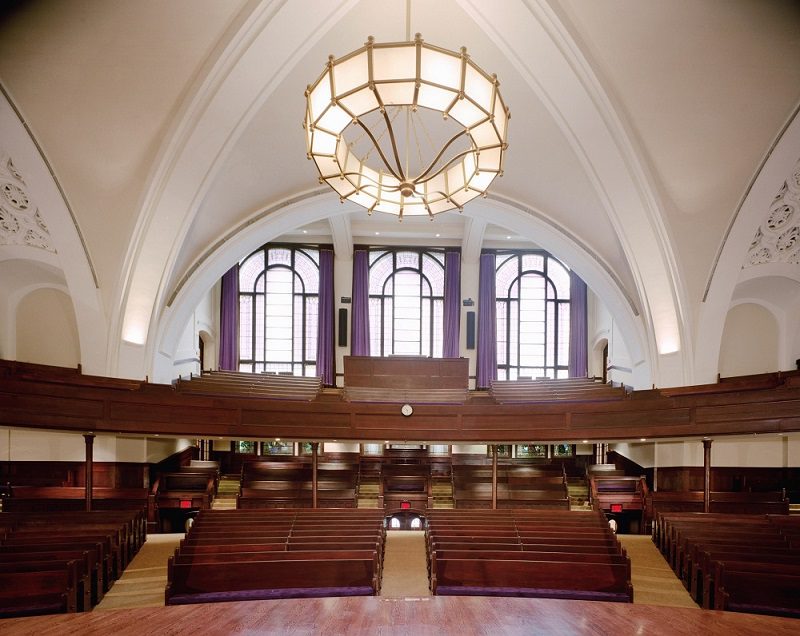
Lighting played a central role in the renovation. New architectural lighting was integrated discreetly within the historic interior to enhance the volume, materiality, and detailing of the original architecture while improving performance for contemporary use. The project also included the full restoration of the central chandelier, preserving one of the defining features of the room.
Additional upgrades included new carpeting, restored seating, and custom cushions designed to complement the historic character of the space while improving comfort and durability.
The renovation reflects an approach that balances preservation with adaptation—maintaining the architectural integrity of a landmark interior while allowing the space to function effectively for present-day cultural and civic use.