
Influenced by the restraint of Adolf Loos and the pragmatism of early American coastal architecture, this North Atlantic residence emphasizes permanence, proportion, and a deep connection to site.
North Atlantic Beach House
Architecture & Interior Design: Mark Holmquist Architect
Perched along a rugged stretch of the North Atlantic coastline, this beach house was conceived as an extension of the landscape itself — grounded, weathered, and quietly resilient against the elements. The architecture draws from the rocky shoreline, windswept vegetation, and muted coastal palette, creating a home that feels deeply rooted in its environment rather than imposed upon it.
The design is informed by a restrained modernism that looks both to early American coastal structures and to the architectural philosophy of Adolf Loos. Rather than relying on expressive forms or ornamental gestures, the house emphasizes proportion, materiality, and permanence. Its quiet, elemental presence reflects a Loosian sensibility — an architecture of restraint where richness is found in texture, craft, and spatial experience rather than decoration. At the same time, the home recalls the directness and pragmatism of early American building traditions, particularly the robust coastal houses and utilitarian maritime structures shaped by climate, exposure, and longevity.
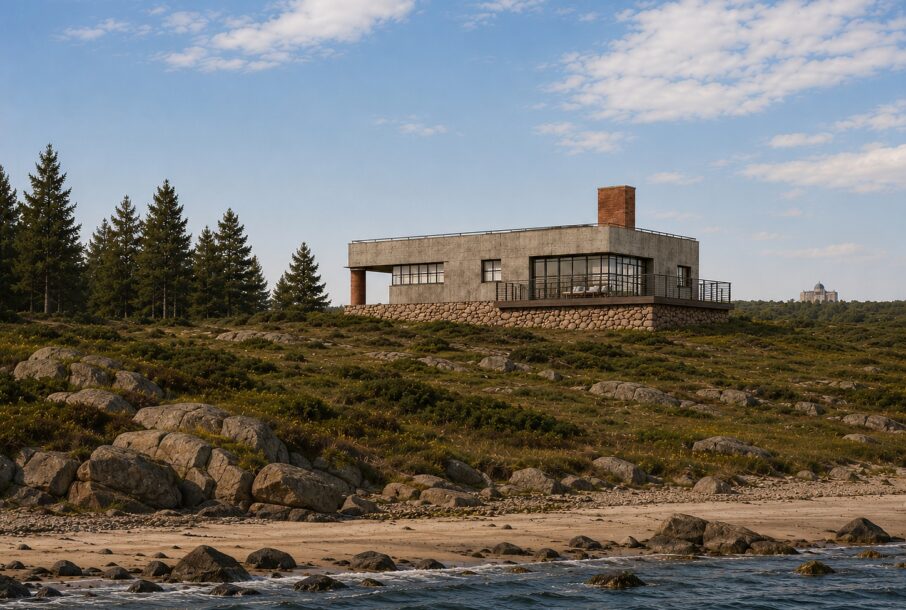
The flat roof emerges from this architectural logic rather than from stylistic preference alone. In the open coastal landscape, the low horizontal profile allows the house to sit calmly against the horizon, minimizing its visual impact and reinforcing a strong connection to the land and sea. The roofline emphasizes the expansive horizontality of the shoreline and sky while allowing the architecture to feel anchored and sheltering against the often severe Atlantic weather. Rather than competing with the landscape through steep or expressive forms, the house adopts a quiet geometry that heightens the experience of the surrounding environment.
The exterior is defined by a restrained material palette of textured concrete, natural stone, darkened steel, and warm brick — materials selected for both their durability and their ability to weather gracefully over time. A stone plinth grounds the structure to the site, echoing the surrounding granite outcroppings along the shore, while the monolithic concrete surfaces take on the tonal qualities of driftwood, sand, and weathered rock. Expansive steel-framed glazing introduces transparency and lightness, balancing the solidity of the massing while framing panoramic views of the ocean and dunes.
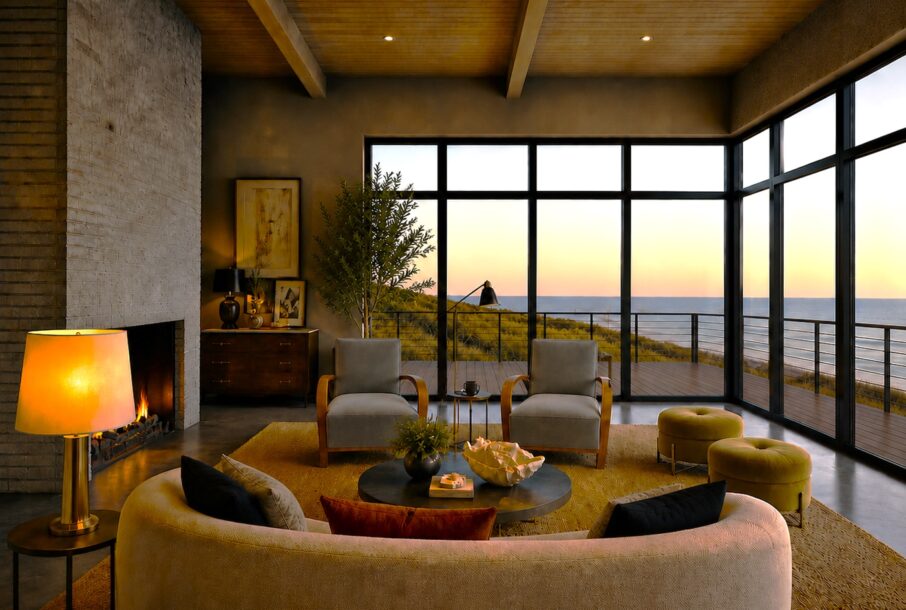
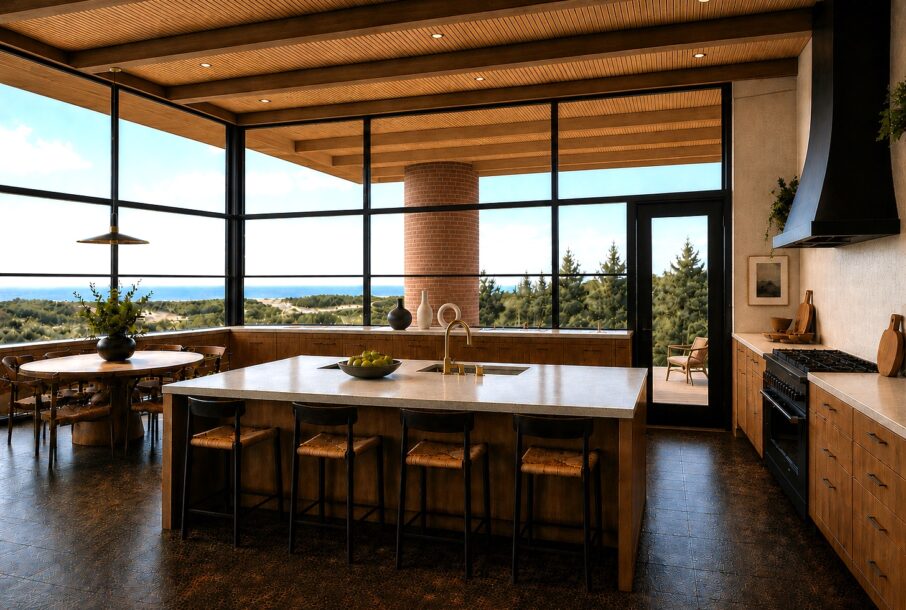
Inside, the material language continues the dialogue with the landscape. Warm wood ceilings and millwork introduce intimacy and warmth, contrasting against the more rugged exterior expression. Brick columns, textured plaster, dark steel detailing, and natural stone surfaces reference the surrounding terrain while creating interiors that feel tactile, calm, and enduring. Large expanses of glass dissolve the boundary between interior and exterior, allowing shifting light, weather, and seasonal change to become part of the daily experience of the home.
The interiors were designed with an emphasis on atmosphere rather than excess — spaces shaped by proportion, natural light, craftsmanship, and material depth. This approach reflects both the discipline of early modernism and the quiet permanence of traditional coastal architecture. The result is a house that feels simultaneously contemporary and timeless: modern in its clarity and restraint yet deeply connected to the enduring character of the North Atlantic landscape.