

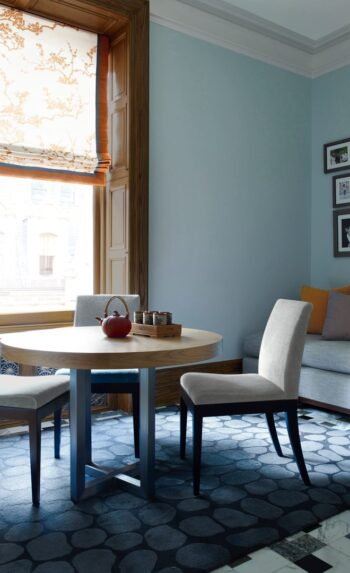
Renovation in the Dakota
Architect: Mark Holmquist Architect
Interior Designer: Jamie Drake (Drake Design Associates)
This kitchen renovation is located within The Dakota Apartments on Central Park West, one of New York City’s most historically significant residential buildings. Designed by architect Henry Janeway Hardenbergh and completed between 1880 and 1884, The Dakota is renowned for its richly detailed Gothic Revival architecture, layered materiality, and extraordinary craftsmanship.
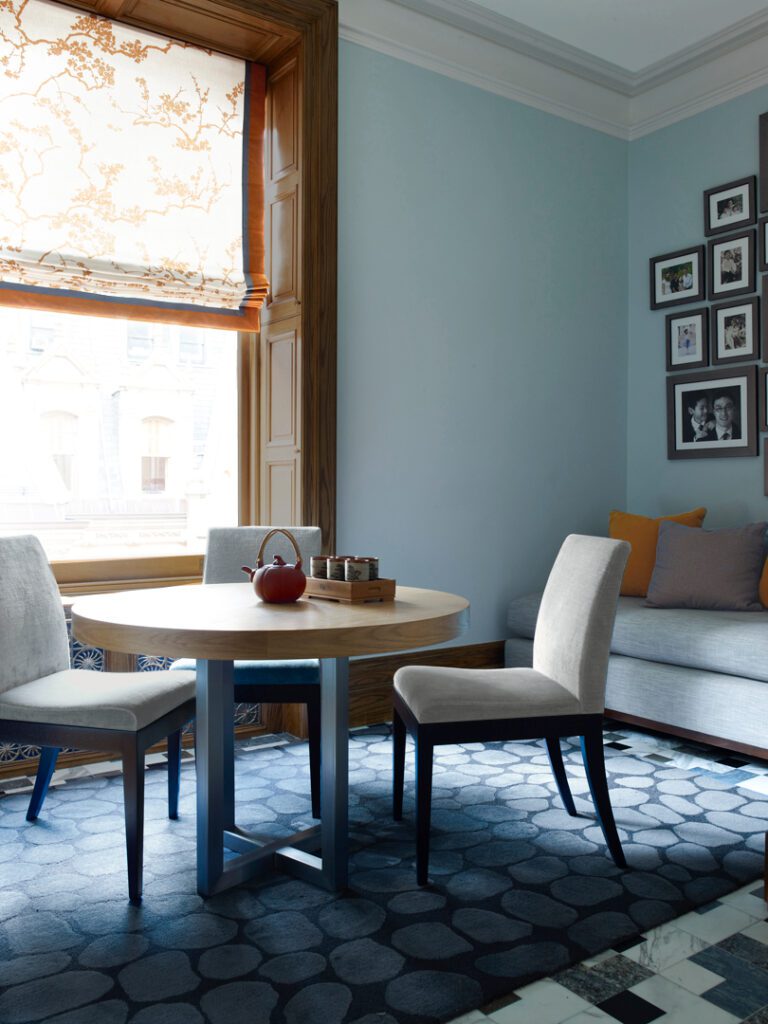
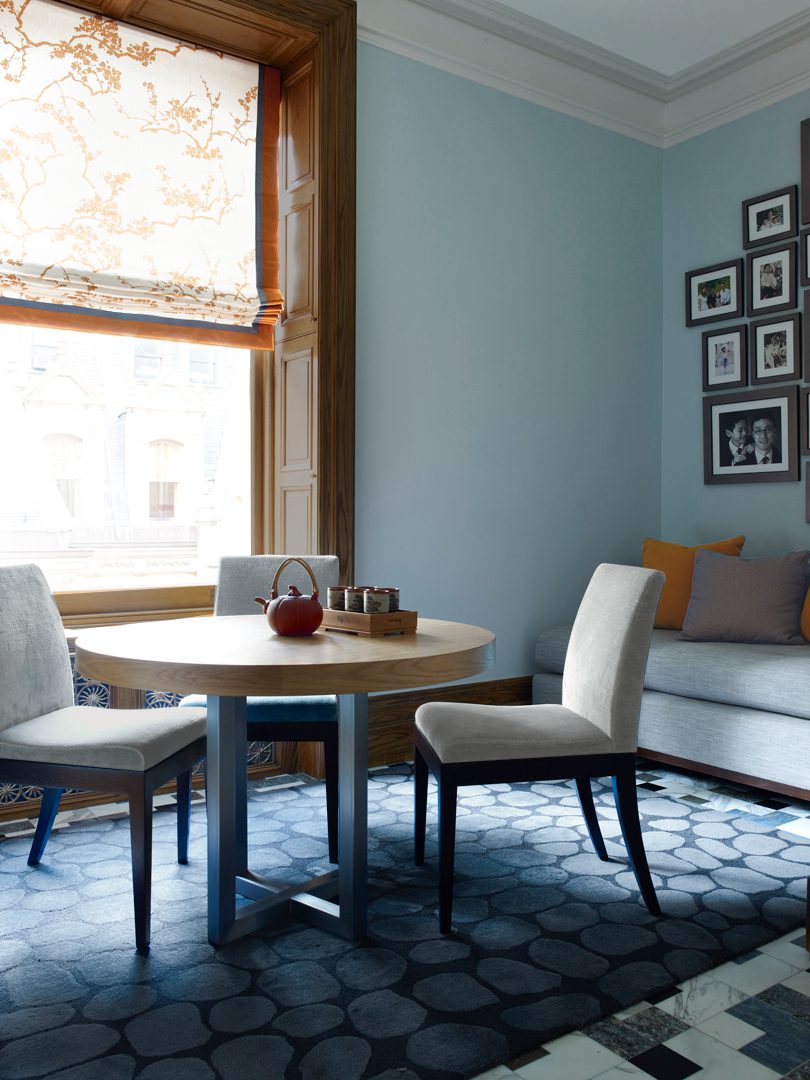
The renovation sought to introduce a contemporary kitchen and bathroom within the historic apartment while preserving the architectural character and visual continuity of the original interiors. Particular attention was given to proportion, detailing, and material relationships so that the new interventions would feel integrated into the larger architectural fabric of the residence rather than imposed upon it.
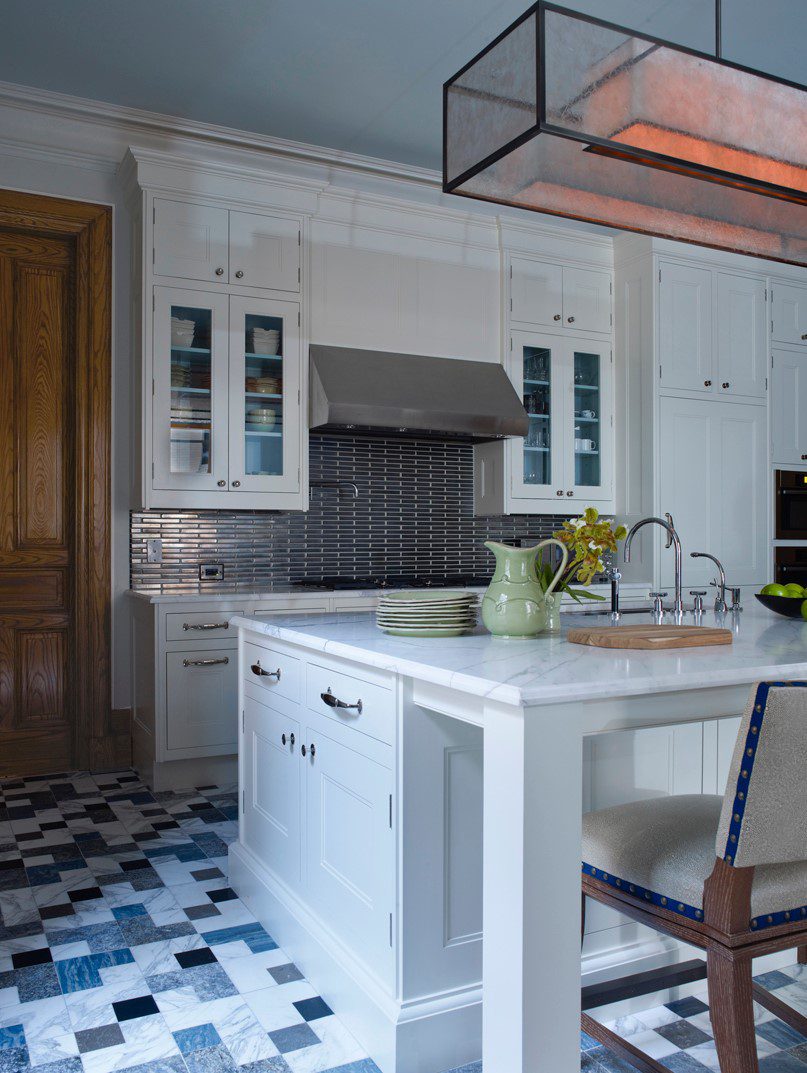
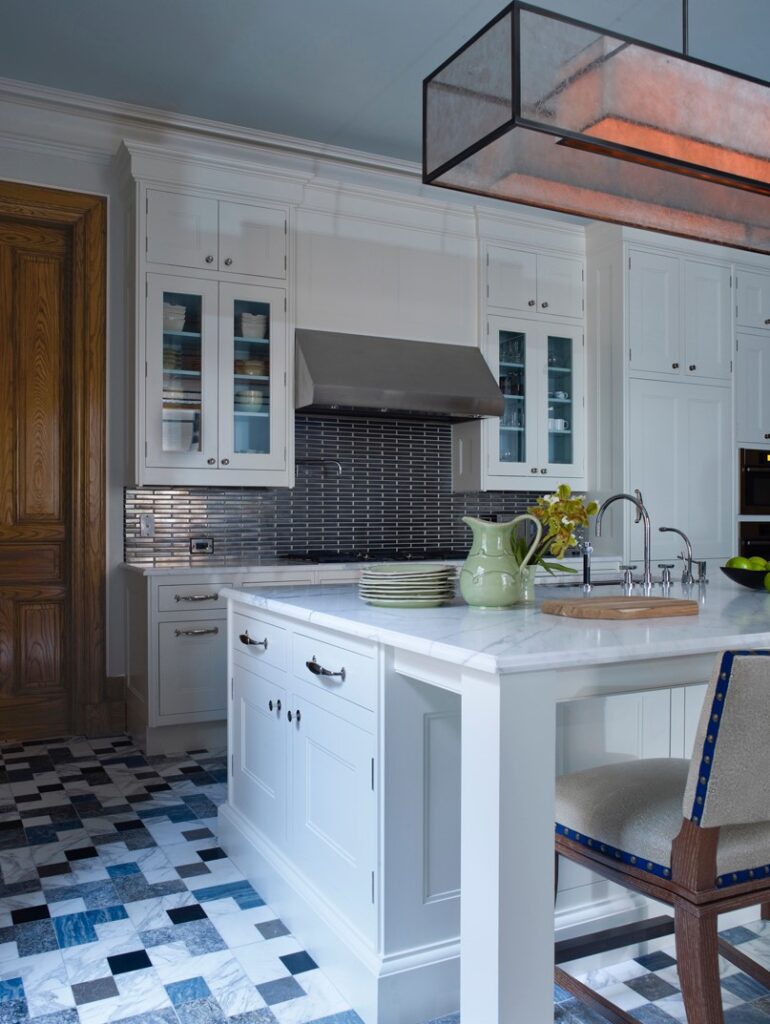
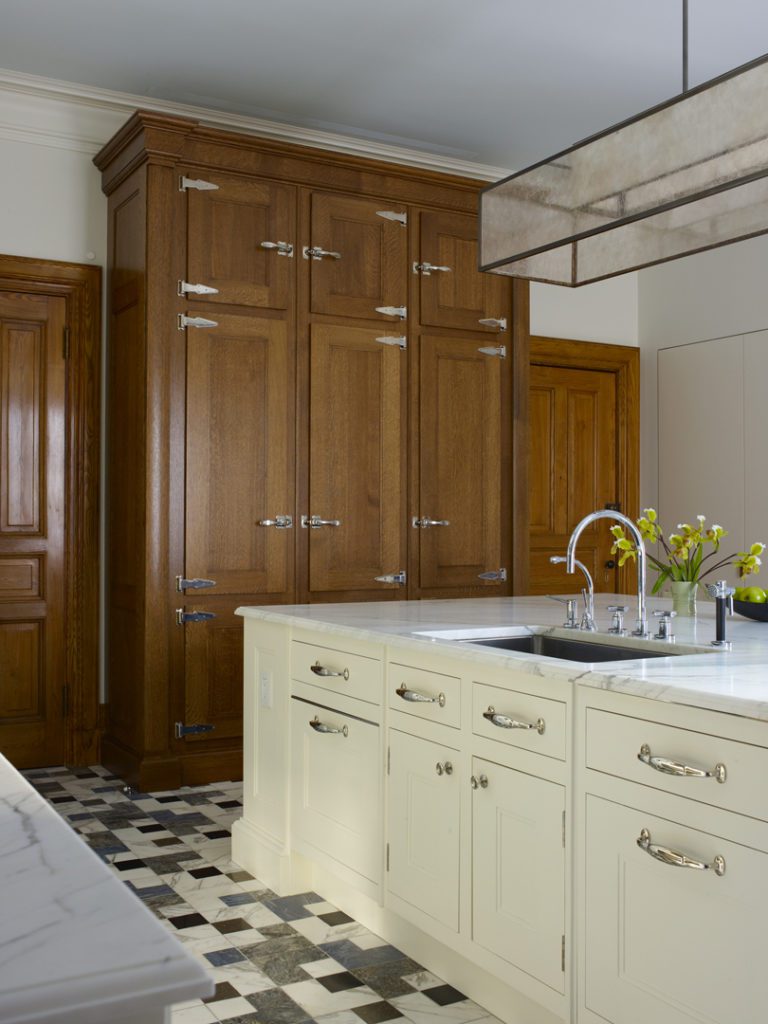
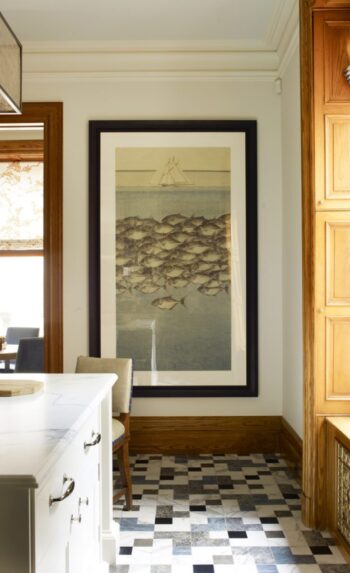
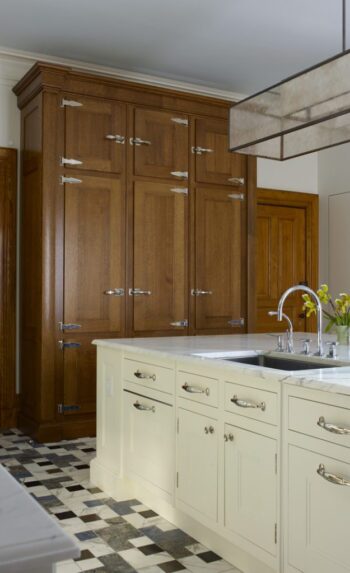
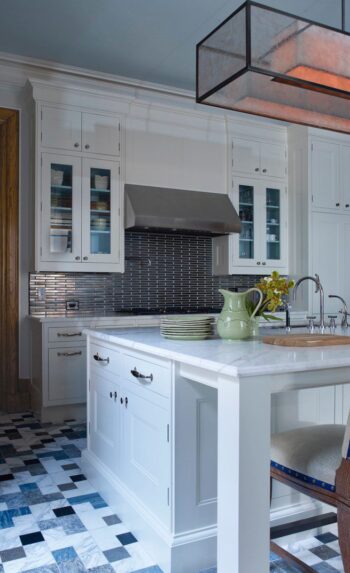
A custom floor-to-ceiling cabinet constructed from wood carefully matched to the apartment’s original millwork became a central architectural element within the kitchen. To balance the visual weight of the darker wood tones and maintain a sense of openness, the remaining cabinetry was finished in white lacquer while continuing the same detailing language throughout the space. The resulting composition creates continuity between old and new while allowing the kitchen to feel lighter and more contemporary.
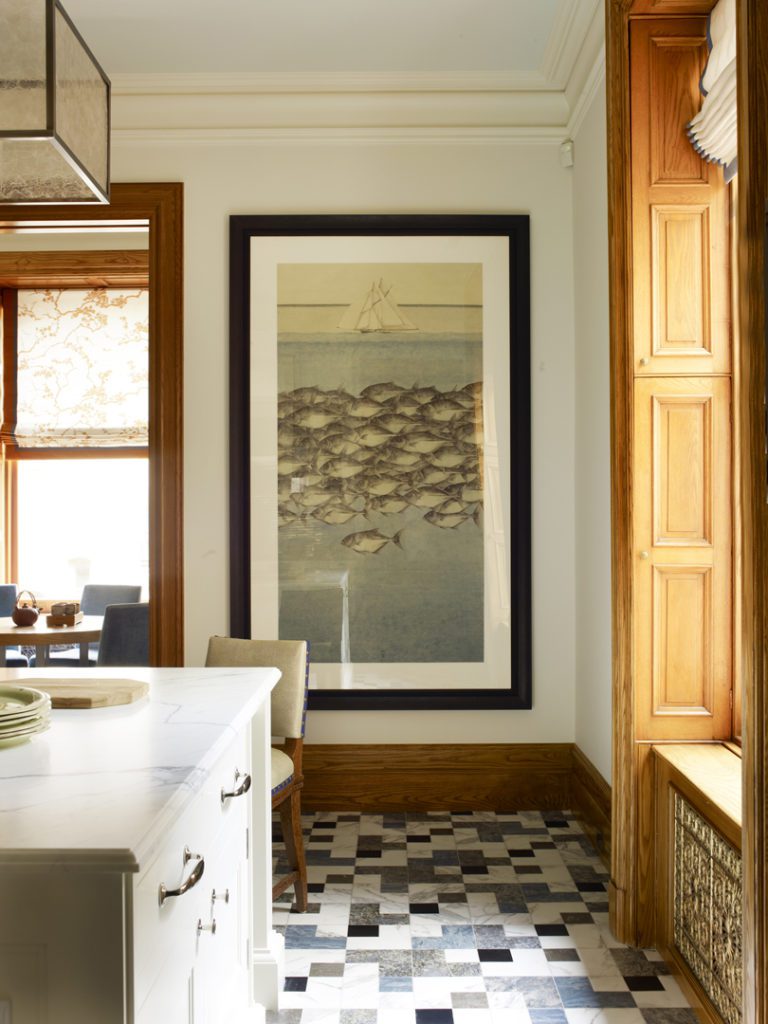
The bespoke marble floor was inspired by the work of Italian architect Carlo Scarpa, whose reinterpretations of historical materials and geometric patterns informed the design approach. The floor introduces a more modern architectural gesture while subtly referencing the mosaic traditions and ornamental surfaces found throughout The Dakota itself.
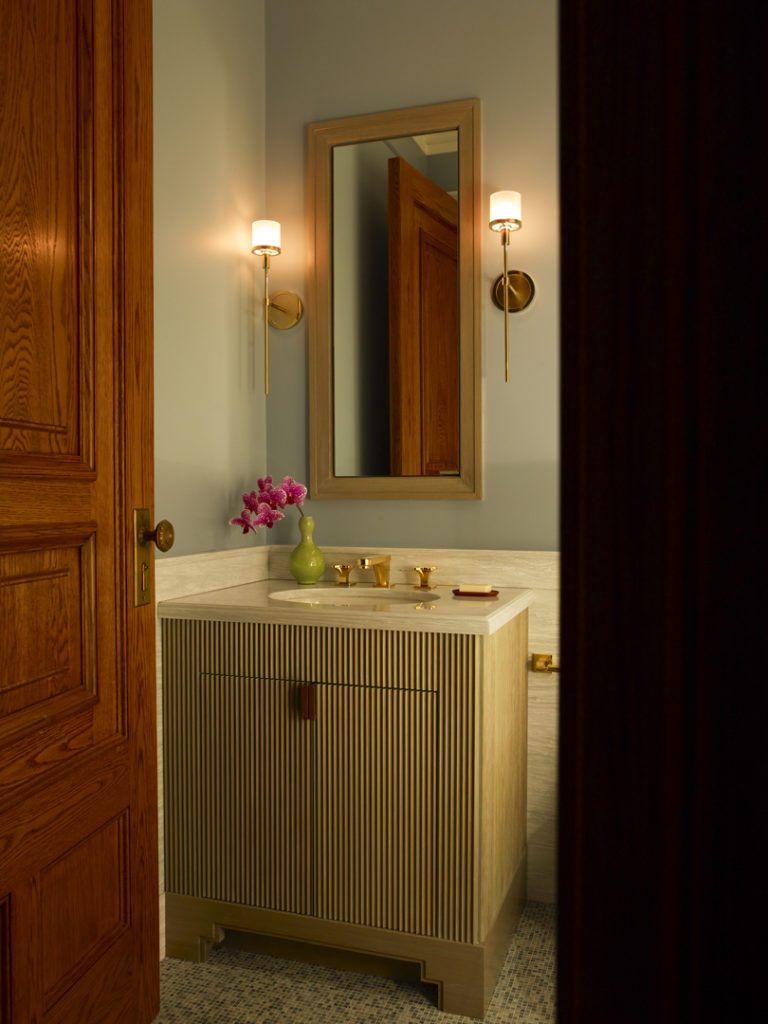
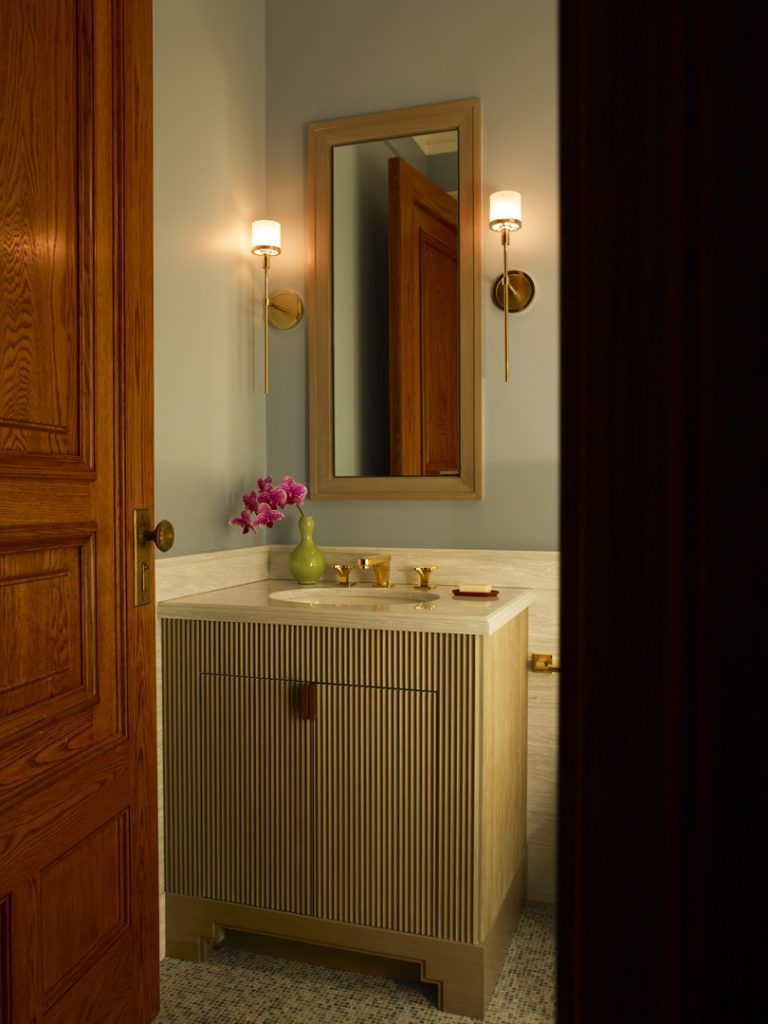
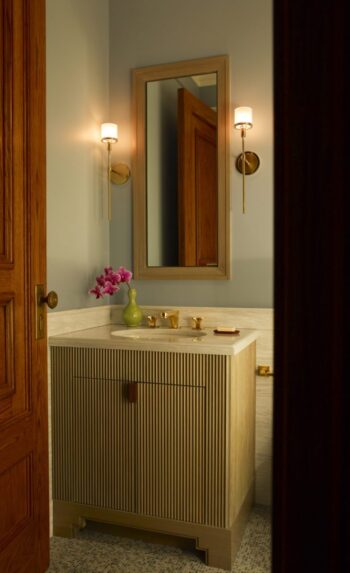
In the adjoining bathroom, custom cabinetry draws from the high Gothic vocabulary of the original building while being simplified through cleaner lines and more restrained detailing. Throughout the renovation, contemporary functionality and updated systems were integrated carefully within the historic structure, preserving the atmosphere and craftsmanship associated with one of Manhattan’s landmark residential buildings.
The project reflects an approach to renovation that values continuity, material integrity, and architectural memory—creating interiors that feel both timeless and fully connected to contemporary living.