
When most people think of New York City residential design, they picture iconic brownstones, Beaux-Arts mansions, or gleaming glass towers. Yet tucked into Manhattan’s grid are some of the most fascinating modern townhouses—homes that between 1900 and 1978 rewrote the rules of what a townhouse could be. These are not just houses; they’re bold architectural experiments that blended art, fashion, and urban living.
From William Lescaze’s pioneering modernist home to Halston’s legendary party palace, these townhouses highlight how modern architecture redefined the possibilities of New York City residential design in its most intimate spaces.
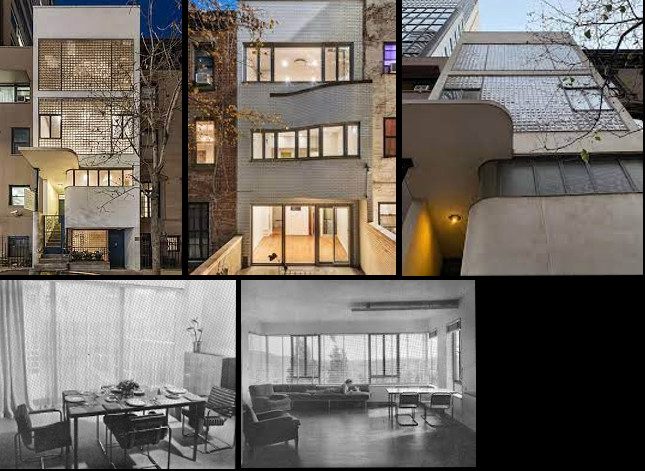
The William Lescaze House (1934) – 211 East 48th Street
Considered the first modernist townhouse in New York City, the William Lescaze House is a game-changer. Swiss-born architect Lescaze ditched the stoop, cornices, and ornament of the traditional brownstone in favor of white stucco, ribbon windows, and glowing glass block walls. Built as both his home and office, it shocked its Turtle Bay neighbors in the 1930s and continues to inspire architects and design lovers today.
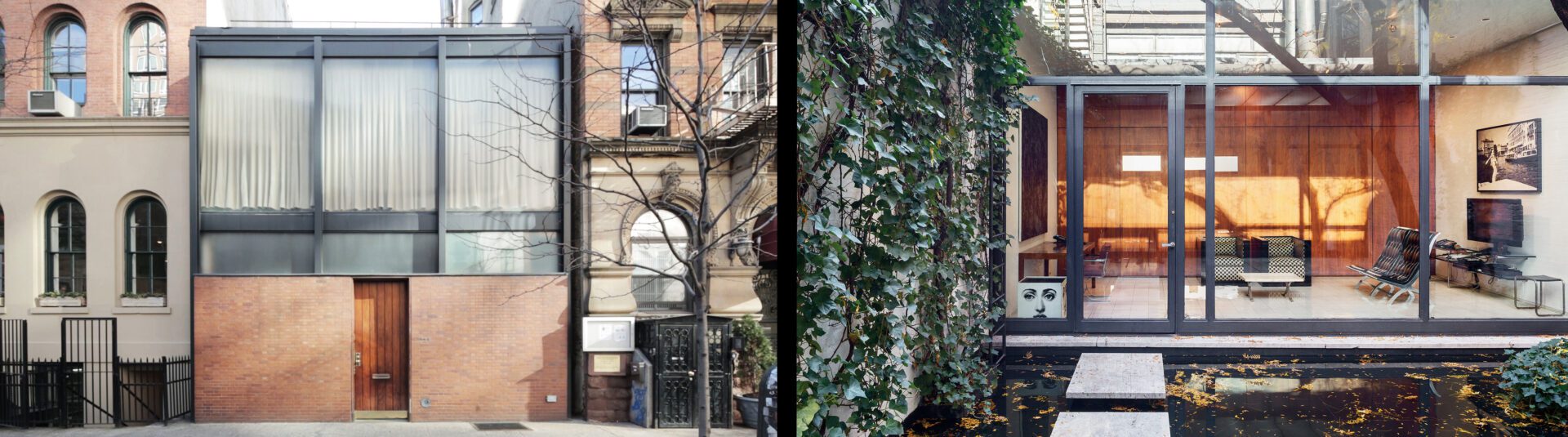
The Philip Johnson Rockefeller Guest House (1950) – 242 East 52nd Street
Blanchette Rockefeller commissioned Philip Johnson to create a townhouse that could function as a gallery and guest house. The result is a minimalist brick-and-glass jewel box that feels serene and almost monastic compared to its Midtown neighbors. Inside, Johnson introduced a private courtyard—a rare luxury in Manhattan—which blurred the line between art gallery, home, and sanctuary.
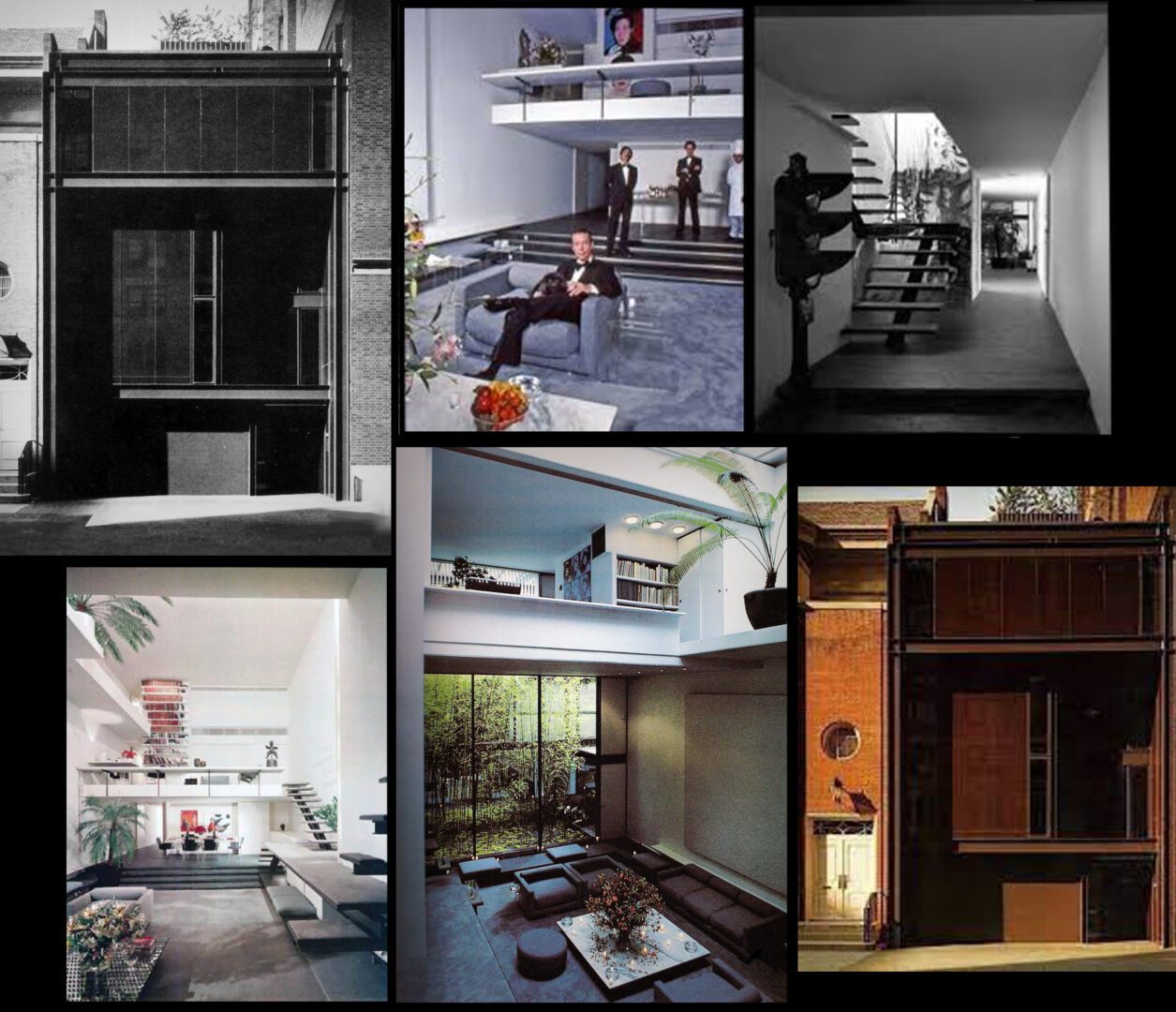
Halston House (1966) – 101 East 63rd Street
Designed by Paul Rudolph for Alexander Hirsch and Lewis Turner and later purchased by fashion icon Halston, this townhouse is a modern architecture landmark in Manhattan. Its split levels, soaring volumes, and cantilevered stairs set the stage for glamorous parties with Andy Warhol, Bianca Jagger, and Liza Minnelli. More than a house, it became a symbol of the Studio 54 era: sleek, dramatic, and unapologetically modern. The house was recently purchased by fashion designer Tom Ford who has completed a full renovation.
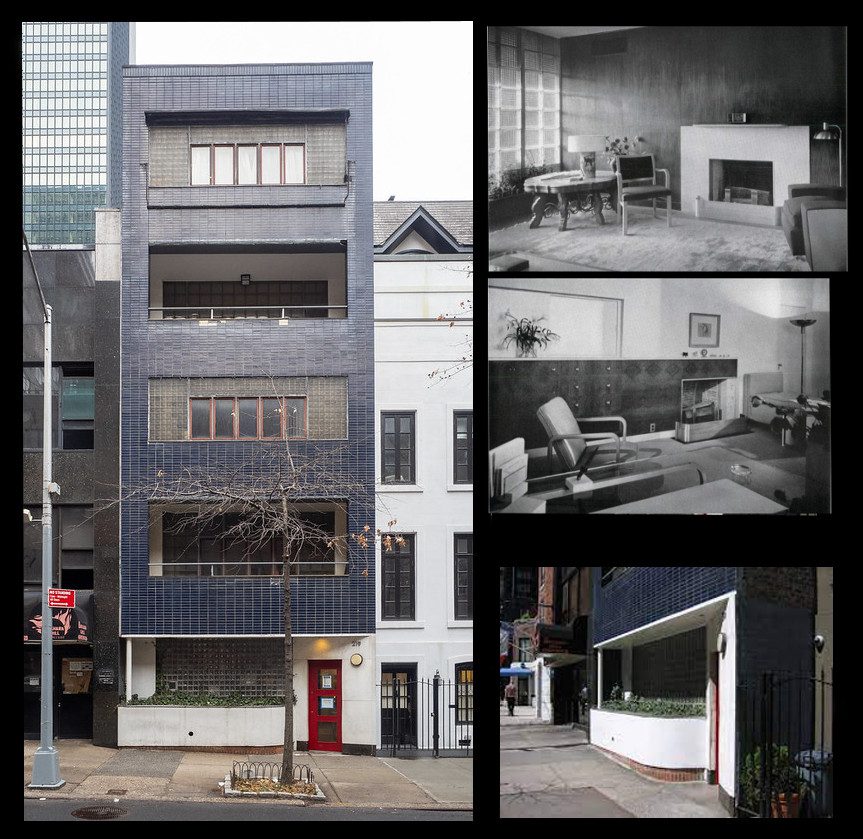
Morris Sanders House (1935) – 25 East 74th Street
Another Upper East Side modernist treasure, the Sanders House introduced streamlined limestone and glass to a street lined with traditional façades. Sanders, an industrial designer, filled the interiors with built-ins and efficient layouts that reflected a forward-thinking vision of urban living.
Paul Rudolph’s Modulightor Building (1974) – 246 East 58th Street
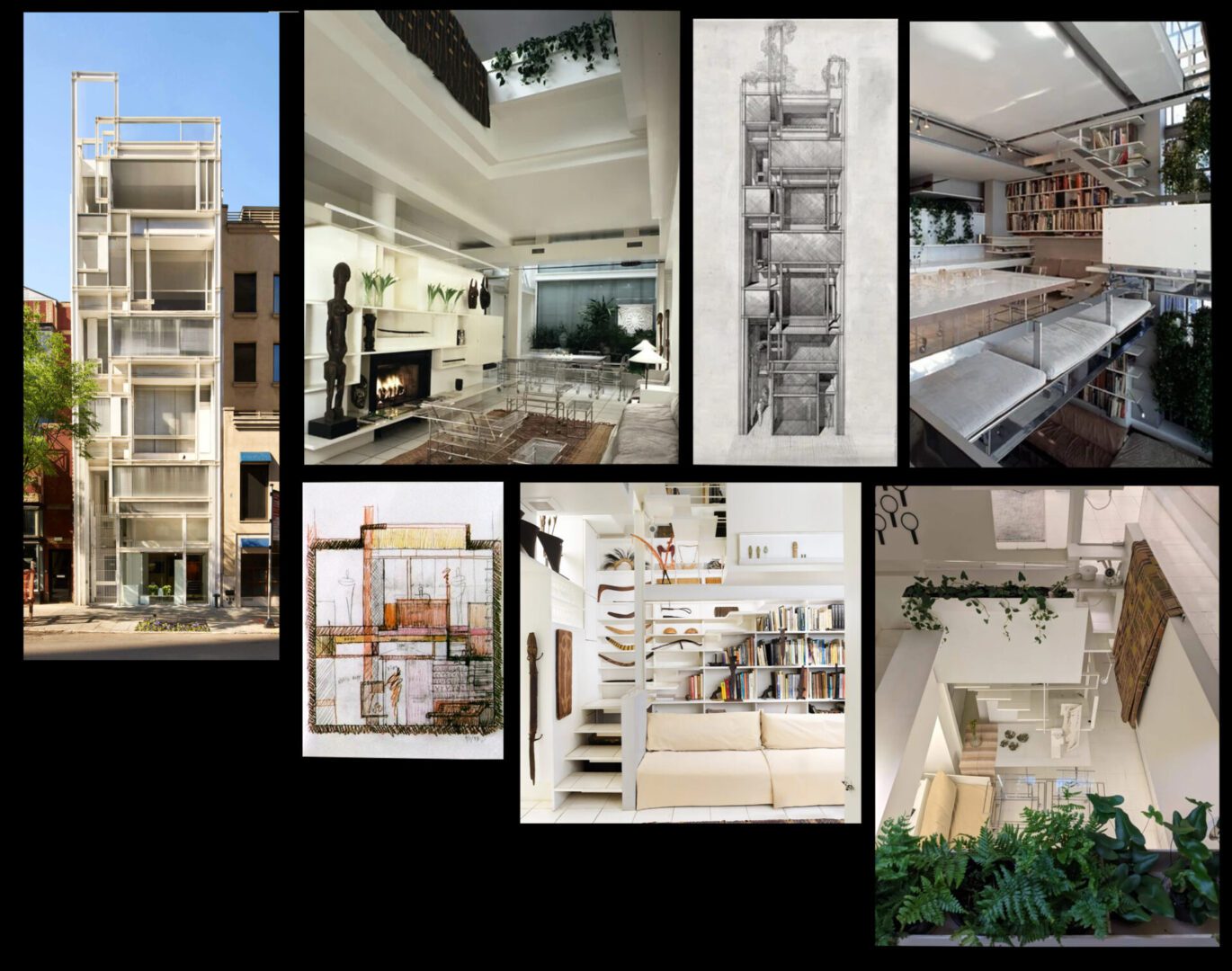
Though technically a hybrid live-work building, Rudolph’s Modulightor project captures the townhouse spirit. Its interlocking planes, stacked spaces, and dramatic stairways create a three-dimensional puzzle of light and shadow. Today it houses the Paul Rudolph Institute, keeping his vision alive in Midtown.
Edward Durell Stone’s Townhouse (1956)
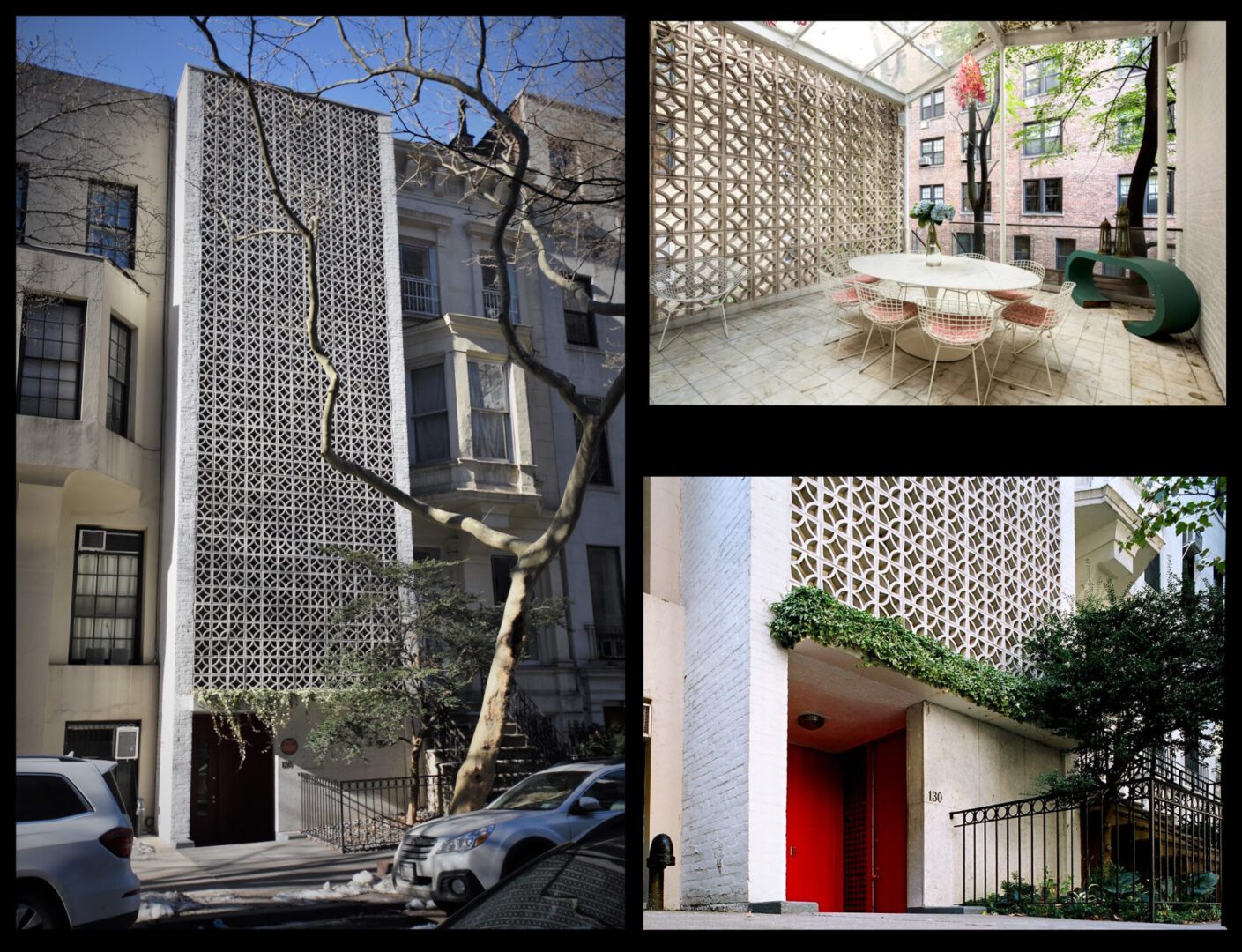
At 130 East 64th Street, Edward Durell Stone took a respectable Upper East Side brownstone and gave it a radical facelift. Out went the stoop and the brown brick; in came white marble and a geometric screen of circles and squares. The result was divisive—critics either adored its daring or loathed its departure from context. But it made Stone’s home unmistakable and positioned him as one of the few modernists willing to rewrite New York’s residential streetscape. To this day, it remains one of the most photographed (and argued about) modern townhouses in the city.
Why These Townhouses Still Matter
Unlike large institutional modernist projects, these Manhattan townhouses explored modern architecture at an intimate residential scale. Constrained by narrow urban lots and surrounded by traditional masonry buildings, architects were forced to rethink light, circulation, privacy, and spatial openness within highly compact footprints. The result was a uniquely New York form of modernism—experimental yet deeply connected to the realities of urban living.
These modern townhouses in New York City were more than just private residences. They were bold statements that challenged the dominance of brownstones and classical revival styles. They embraced new materials, transparency, and innovative layouts that redefined what urban living could look like.
Today, these homes are cultural landmarks—visited by architects, admired by design lovers, and in some cases, still lived in by New Yorkers who value architecture as art.
So next time you’re wandering Manhattan, look beyond the stoops and cornices. Hidden among them are modernist masterpieces—quietly elegant, dramatically experimental, and forever a part of New York’s architectural story.